News7 min read
Chinese Cars: The Security Question Reaches Company Fleets
MEPs, Belgian Defence: why Chinese connected cars are raising concerns and what you should check in your company fleet.
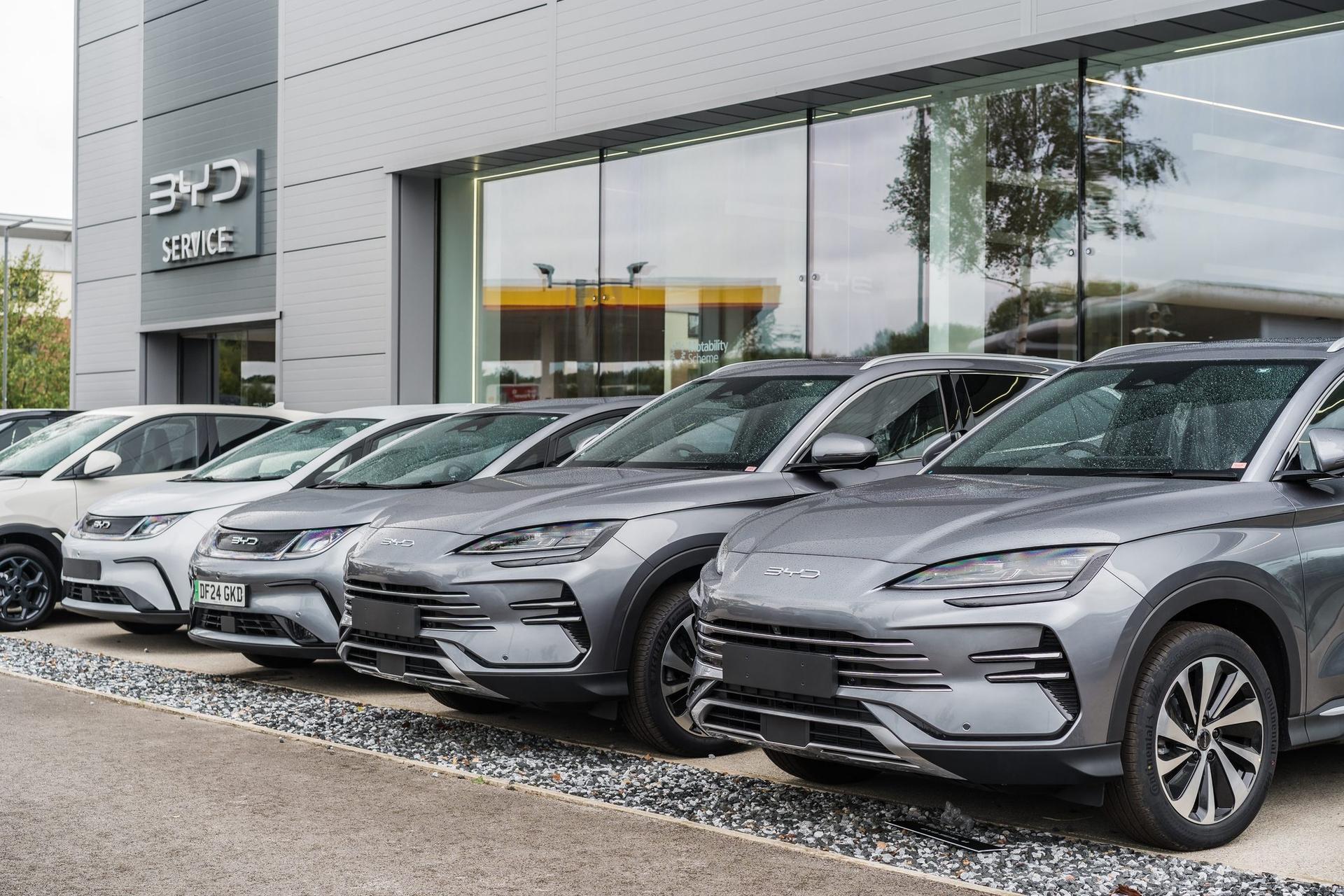
On 4 November, fourteen MEPs asked the European Commission to have ENISA assess the risk posed by BYD's connected cars. Belgian Defence, for its part, is no longer buying China-built DS 9s for its general officers. For a company, the question remains what a connected car records about its activities and who can access that data.
What are the MEPs asking for?
According to Reuters, fourteen Members of the European Parliament submitted written questions to the Commission on 4 November. The initiative is led by French socialist François Kalfon (S&D). The MEPs ask whether the Commission intends to refer the matter to ENISA, the European Union Agency for Cybersecurity, to assess BYD, and whether the carmaker could be classified as a high-risk supplier under the future revised Cybersecurity Act.
They point to the vehicles' 360-degree cameras, GPS, microphones, radars and mobile connectivity, and rely on China's 2017 National Intelligence Law, which requires Chinese organisations to cooperate with the state's intelligence services.
BYD told Reuters that no data processed or stored, whether in the cloud or in the vehicle, can be accessed remotely from China, and that BYD Europe does not transfer this data to group entities or third parties in China. As of 13 November, the Commission had not yet replied. As the Journal de l'Automobile points out, Chinese law alone does not prove that a carmaker transmits data.
What armed forces are doing
In Norway, according to the local press, Chinese rental cars used during a Home Guard exercise from 14 to 18 September recorded the soldiers' movements, their destinations and the codes entered at the gates of secure sites. At the end of 2025, Oslo's public transport operator, Ruter, discovered while testing a Yutong electric bus that the manufacturer had remote access via the mobile network, in theory sufficient to immobilise the vehicle. It did not, however, find any images being sent by the cameras.
Poland now only allows China-made vehicles onto its protected military sites if certain functions are disabled, and it prohibits connecting a work phone to them. The United Kingdom and Israel have restricted access to their defence premises. At the end of October, the US military closed Kadena Air Base in Japan to BYD vehicles, judging the risk unacceptable and impossible to mitigate. In South Korea, the navy has recorded at least 565 entries of unregistered Chinese vehicles into its facilities this year, and the Ministry of National Defence wants to restrict connected cars at its sensitive sites by the end of the year.
Belgian Defence's decision
Since September, Defence has stopped buying the DS 9 for its general officers. The saloon carries a French brand from the Stellantis group, but it is built exclusively in China. A new tender is being prepared, and security risks will weigh much more heavily in it.
Lieutenant General Frédéric Goetynck confirmed the decision to VTM Nieuws. According to him, the DS 9 remains technically reliable, but the threat assessment has changed since the current fleet was ordered. The General Intelligence and Security Service (GISS) examined some of the vehicles and issued internal guidelines. No evidence of espionage has been made public, and the decision is a precautionary one.
The general also acknowledges that a modern car without a single Chinese part probably does not exist. The armed forces are therefore looking less at where the car is built than at who controls its data, its software and its remote access.
Why this also concerns companies
Chinese brands accounted for 12.7% of new car sales in Europe in the third quarter of 2026, ahead of Japanese brands (11.9%), according to the research firm Dataforce. Five years ago, they made up barely 1% of the market.
In Belgium, these cars come in mainly through fleets. Company cars are driving electrification: 89% of electric car sales in 2025 were company cars, according to EV Belgium. And Chinese brands are making their way into leasing catalogues, as shown by the BYD Lease offer launched with Ayvens in Belgium and Luxembourg.
A company car records its driver's journeys, and therefore the sites, customers and partners they visit. When connected to the business phone, it often synchronises contacts, messages and calendar. It also carries cameras, sometimes microphones and a SIM card, and the manufacturer updates it remotely. For an executive or the manager of a sensitive site, this data has real value.
All connected cars are affected
All connected cars collect this data, whatever their origin. Since July 2024, every new car registered in the Union must come from a manufacturer whose cybersecurity management system is certified under UN Regulation R155. This regulation protects against the vehicle being hacked, but it says nothing about which jurisdiction the manufacturer is subject to or who can access the data.
In February, the European Commission and the NIS Cooperation Group warned that connected vehicles posed new cybersecurity risks, and Brussels is pushing Member States to reduce their dependence on high-risk suppliers.
The questions to ask a carmaker are the same as for any IT supplier: who owns it and which jurisdiction it answers to, where the data goes, which independent assessments it can show, who pushes the updates and how to delete the data at the end of the contract.
Questions to ask your fleet manager and your CISO
- Which vehicles enter our sensitive sites, both fleet vehicles and those of visitors and subcontractors, and where do they park?
- Do our executives connect their business phone to their car's infotainment system, and what does it synchronise: contacts, messages, calendar?
- Has the leasing catalogue been reviewed with a security criterion: where is the data hosted, what remote access does the manufacturer retain and which jurisdiction does it answer to?
- For the most exposed functions, can geolocation, cameras and microphones be disabled?
- What happens to the data recorded in the car when it is returned at the end of the lease?
Frequently asked questions
Are Chinese cars banned in Europe?
No. The measures taken by several armed forces concern access to sensitive sites, not the sale of vehicles. As of 13 November, the European Commission had not replied to the MEPs.
Does BYD transmit data to China?
BYD states that no data from its vehicles can be accessed remotely from China, and no public evidence to the contrary has been produced. The concern stems from China's 2017 law, which requires companies to cooperate with intelligence services.
Does the risk only concern Chinese brands?
No. All connected cars collect location data, phone data and sometimes images. The question is who controls this data and remote access, whatever the brand.
What should a Belgian company check?
The vehicles that enter its sensitive sites, the connection of business phones to infotainment systems, the security criteria of its leasing catalogue and the deletion of data at the end of the contract.
Sources
- MotorsActu, 13 November 2026, based on Reuters (MEPs' questions, BYD's response, Norway, Poland): https://motorsactu.com/voitures-chinoises-byd-espionnage-sites-militaires-enisa/
- Journal de l'Automobile, 3 November 2026 (François Kalfon's initiative, Kadena, China's 2017 law): https://journalauto.com/industrie/francois-kalfon-depute-europeen-veut-interdire-lacces-des-voitures-byd-aux-sites-militaires/
- Free Press Journal (IANS), 4 November 2026 (Kadena, South Korea): https://www.freepressjournal.in/tech/chinese-electric-vehicles-pose-growing-espionage-threat-to-us-military-bases-overseas-report
- Newmobility.news, 12 August 2026, Belgian Defence drops the DS 9 (VTM Nieuws, Lieutenant General Goetynck, Ruter, NIS Cooperation Group): https://newmobility.news/en/2026/08/12/belgian-army-dumps-china-built-ds-9-over-spying-fears/
- La Libre (Belga), 26 October 2026, market share of Chinese brands according to Dataforce: https://www.lalibre.be/dernieres-depeches/2026/10/26/les-voitures-chinoises-desormais-plus-populaires-que-les-japonaises-en-europe-Z4RNNZWSSRHFBGYPP4RSMOBQYM/
- La Libre (Belga), 6 January 2026, electric car sales in Belgium according to EV Belgium: https://www.lalibre.be/dernieres-depeches/2026/01/06/les-ventes-de-voitures-electriques-progressent-mais-le-secteur-veut-lever-lincertitude-5VA7RZBCBBDNZNZ5EVVSRDTL3E/
- Ayvens, launch of BYD Lease in Belgium and Luxembourg: https://www.ayvens.com/nl-be/over-ayvens/blog/nieuws/ayvens-en-byd-lanceren-byd-lease/
- UN Regulation R155 on vehicle cybersecurity, mandatory for all new cars registered in the EU since July 2024
Read next
 News
7 min read
Sextortion: More Than 550 Reports to Child Focus This Year
Child Focus received more than 550 sextortion reports in 2026, 152% more than in 2025. How this blackmail works, what AI changes and what to do.
Read the article News
6 min read
Microsoft 365 Outage: More Than 24 Hours Without E-mail, Now What?
Microsoft 365 down from 12 to 14 November in 74 countries: the cause, the phishing that followed and five decisions to make before the next outage.
Read the article News
7 min read
Lynx Data Breach: What the Broker's Second E-mail Says
National Register number, ID document, portfolio value: what the Lynx breach exposes, why it is sensitive and the questions to ask in your organisation.
Read the article