News7 min read
Sextortion: More Than 550 Reports to Child Focus This Year
Child Focus received more than 550 sextortion reports in 2026, 152% more than in 2025. How this blackmail works, what AI changes and what to do.
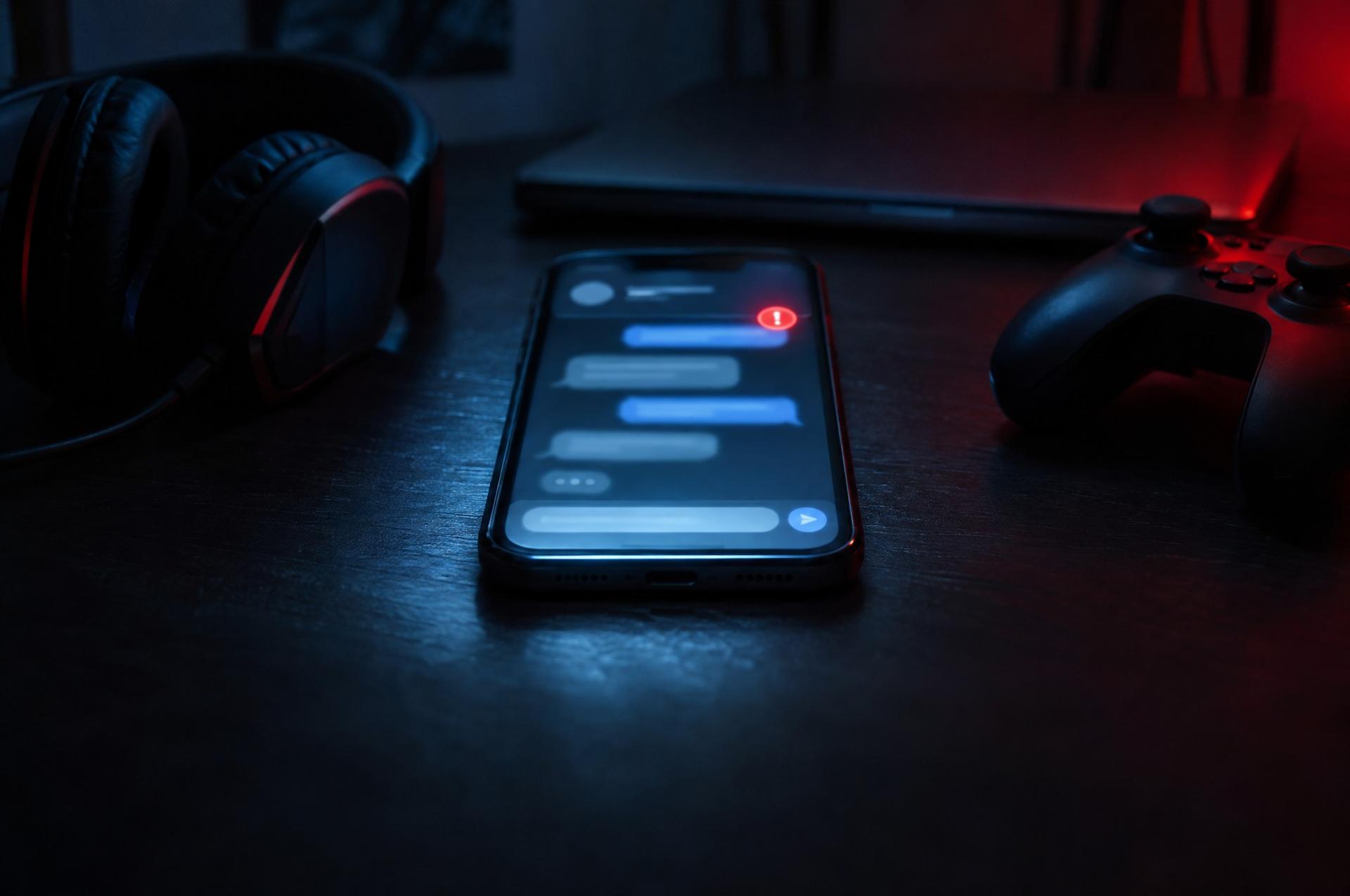
This Wednesday, 18 November, the European Day on the Protection of Children against Sexual Exploitation and Sexual Abuse comes amid a sharp rise in sextortion. Child Focus has received more than 550 reports since January, 152% more than last year, and is seeing more and more scammers use artificial intelligence. The victims are mainly young teenagers, but adults also receive threats, sometimes at their work e-mail address.
What is sextortion?
Sextortion is blackmail based on an intimate image. The perpetrator poses as a teenage boy or girl on a social network or messaging app, gains the victim's trust and obtains an intimate photo or video. They then threaten to share it with the victim's friends and family to extort money or more images.
Safeonweb, the website of the Centre for Cybersecurity Belgium, distinguishes this blackmail from the "sextortion scam", in which the scammer has no image at all and sends the same threatening e-mail to thousands of people.
The Council of Europe made 18 November the Day on the Protection of Children against Sexual Exploitation and Sexual Abuse in 2015. This year, it is dedicating the day to the way the media report on this violence while protecting the identity of victims.
More than 550 reports in one year
Since January, Child Focus has opened more than 550 financial sextortion cases, compared with 218 over the same period last year. In 92% of cases, the victim is a boy. It is the only form of sexual exploitation in which boys outnumber girls, and those who contact the foundation are often 14 or 15 years old. Child Focus has not carried out a study on this point, but points to greater risk-taking, impulsiveness and a strong need for validation at that age.
The real figures are probably higher. In a Flemish study of young people aged 6 to 18, 9% say they have already been sexually blackmailed, and 43% of these victims did not know who to turn to. According to Child Focus, shame and fear prevent many victims from asking for help.
AI makes fake profiles more convincing
Scammers have long used photos stolen from existing accounts. Child Focus is now seeing more and more perpetrators use AI to pass themselves off as someone else, even in video calls. The foundation cites the case of a teenager who had asked his contact for a video call to check who they were. The video reassured him, and the intimate photos he then sent were used to blackmail him.
RTBF tested a consumer tool that replaces the person in a video while keeping their gestures, expressions and lip movements, for around sixty euros a month and a few dozen minutes of work. Child Focus also reports fake AI-generated profiles that write in the victim's language, and "deepnudes", nude images fabricated from real photos. In Belgium, creating or distributing a sexual image of a person without their consent, deepnudes included, is punishable by six months to five years in prison.
Cédric Glineur, a volunteer with the Brussels association "Arnaque-moi si tu peux", tracks down extorted images online to have them removed. In his view, AI is not yet the main factor, because scammers often do not need it. At the federal police, the unit specialising in child abuse notes that AI-edited images make suspects harder to identify.
The right reflexes for young people
Child Focus's first piece of advice is never to pay, because a first payment almost always leads to further demands. The foundation also recommends:
- keeping screenshots of the conversation and the profile, which will serve as evidence;
- cutting off all contact, then blocking and reporting the profile on the social network;
- talking about it to a trusted adult;
- calling Child Focus on 116 000, free of charge and available day and night, and filing a complaint with the police.
Child Focus provides non-judgemental psychological support and technical help, for example to find out where the images have been shared. The first thing the team tells victims is that it is not their fault. For teenagers, the foundation has also created the Payboy.be website.
The role of parents
On 18 November, Child Focus is launching "The Script", a short film that explains how the trap works and helps parents talk about it with their children. The foundation advises them to listen without judging and to let the child speak. A child victim has done nothing wrong: it is the blackmailer who is committing an offence.
Adults receive threats too
The sextortion scam mainly targets adults, including at their work address. The message often appears to come from the recipient's own address. It claims that the computer has been hacked and that a video has been recorded through the webcam, then demands a ransom. Some messages quote a real password to seem credible, but this password almost always comes from an old data leak.
These e-mails have been coming back in waves for years, and Safeonweb received more than 4 600 reports of them in a single week in November 2022. If you receive one, do not reply and do not pay. Forward it to suspect@safeonweb.be, change the password quoted if you still use it and enable two-factor authentication.
What an organisation can do
A company is affected in two ways: its employees receive these blackmail e-mails, and many of them are parents of teenagers. Three measures are easy to take:
- Cover sextortion in the awareness programme, like phishing, explaining that the "I filmed you" e-mail is a bluff.
- Make it clear that this type of message can be reported to the security team without embarrassment, and that you should never pay.
- Share Child Focus's 116 000 number, the Payboy.be website and the film "The Script" internally, so that parents know what to do if their child is affected.
Frequently asked questions
What is sextortion?
It is blackmail based on an intimate image. The perpetrator threatens to share a photo or video to obtain money or more images.
What should I do if my child is a victim of sextortion?
Listen without judging, do not pay, keep screenshots, cut off contact and report the profile. Call Child Focus on 116 000, available day and night, and file a complaint with the police.
Should you pay the blackmailer?
No. According to Child Focus, paying almost always leads to further demands.
Is the e-mail claiming to have filmed me through my webcam serious?
In the vast majority of cases, it is a bluff sent out in bulk, and the password quoted comes from an old data leak. Do not reply, do not pay and forward the message to suspect@safeonweb.be.
How is AI used in sextortion?
It is used to create more convincing fake profiles, to fake video calls by swapping a face and to fabricate "deepnudes" from real photos.
Sources
- RTBF, Marie-Laure Mathot, 18 November 2026, AI as a new sextortion weapon (Child Focus figures, test of a video tool, federal police, advice): https://www.rtbf.be/article/l-intelligence-artificielle-nouvelle-arme-de-sextorsion-pour-les-predateurs-aupres-de-tres-jeunes-ados-11815234
- VRT NWS with Belga, 18 November 2026, more than 550 reports to Child Focus (152% increase, 92% boys, Flemish study, the film "The Script"): https://www.vrt.be/vrtnws/fr/2026/11/18/child-focus-a-recu-plus-de-550-signalements-de-sextorsion-cette/
- Council of Europe, the 18 November Day and the theme of the 2026 edition: https://www.coe.int/fr/web/children/2026-edition
- Better Internet for Kids, Child Focus advice for parents: https://better-internet-for-kids.europa.eu/news/what-can-parents-do-if-their-child-victim-sextortion
- Child Focus, launch of Payboy and the 116 000 number: https://childfocus.be/fr-be/A-propos/Actualite/Nouvelles/Post/15246
- Institute for the Equality of Women and Men, non-consensual distribution of intimate images and deepnudes: https://aide.igvm-iefh.belgium.be/sites/default/files/media/documents/NCII%20FR.pdf
- Test-Achats, the sextortion e-mail scam: https://www.test-achats.be/hightech/phishing/news/phishing-sextorsion
- Paris Match Belgique, 8 November 2022, more than 4 600 reports in one week to Safeonweb: https://www.parismatch.be/lifestyle/technologie/2022/11/08/plus-de-4-600-cas-darnaques-par-sextorsion-sont-signales-en-une-semaine-en-belgique-UMAJKV76MRBUZPUZGJYAB7FPOI/
- Selectra, why the blackmail e-mail quotes a real password: https://selectra.info/telecom/actualites/marche/mail-chantage-webcam-ancien-mot-de-passe
Read next
 News
6 min read
Microsoft 365 Outage: More Than 24 Hours Without E-mail, Now What?
Microsoft 365 down from 12 to 14 November in 74 countries: the cause, the phishing that followed and five decisions to make before the next outage.
Read the article News
7 min read
Lynx Data Breach: What the Broker's Second E-mail Says
National Register number, ID document, portfolio value: what the Lynx breach exposes, why it is sensitive and the questions to ask in your organisation.
Read the article News
7 min read
Chinese Cars: The Security Question Reaches Company Fleets
MEPs, Belgian Defence: why Chinese connected cars are raising concerns and what you should check in your company fleet.
Read the article